
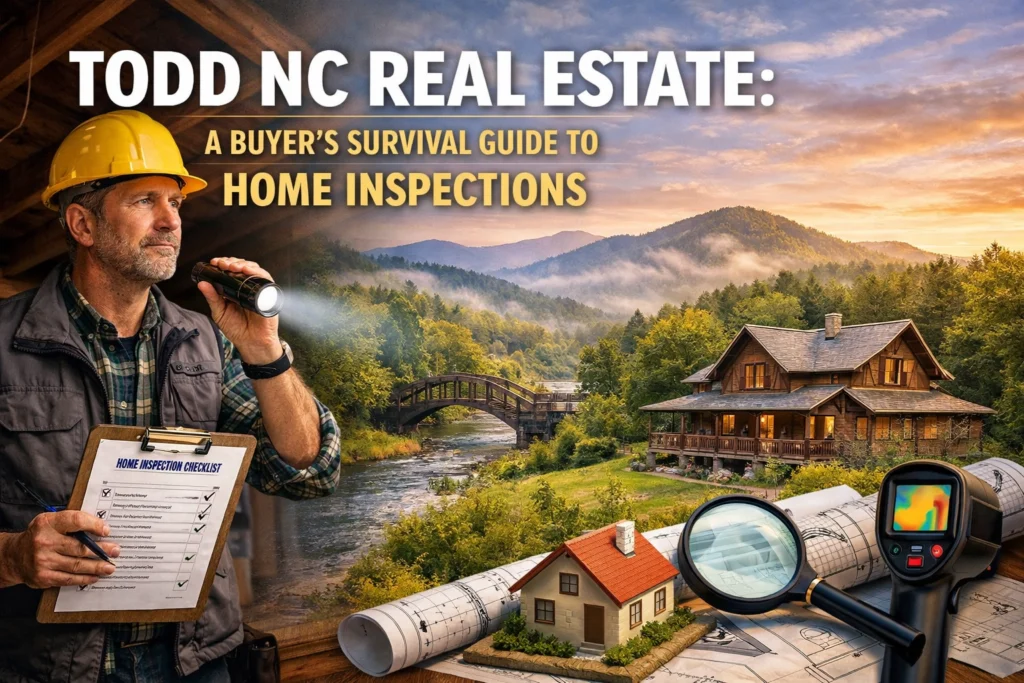
Buying a home in Todd, North Carolina, is a bit like falling in love with a classic novel. The setting is breathtaking, with the South Fork of the New River winding through the valley and the gold-brown mountain peaks of the High Country framing every sunset. But just like a classic novel, mountain homes have their own unique “plot twists” that you won’t find in a suburban subdivision.
When you are looking at Todd NC real estate, you aren’t just buying four walls and a roof; you’re buying a piece of the Appalachian landscape. Because our terrain is rugged and our climate is distinct, a standard home inspection needs a little extra mountain-specific TLC. At Ashe County Realty, we want you to move into your mountain retreat with total confidence.
Here is your survival guide to navigating home inspections in Todd and ensuring your dream home doesn’t come with any unwanted surprises.
Why Mountain Inspections are Different
In many parts of the country, a home inspection focuses heavily on the age of the HVAC or the state of the kitchen appliances. While those are important here too, our environment adds a few layers of complexity. In North Carolina, inspections aren’t legally required, but they are your best defense against “buyer’s remorse.”
A local inspector knows how to “read” the land. They understand how the freeze-thaw cycle affects mountain foundations and how heavy spring rains impact mountain drainage. Before you dive deep into the process, it’s a good idea to brush up on real estate terms every buyer and seller should know so you can speak the same language as your inspector.
1. Foundations on the Edge: Living on a Slope
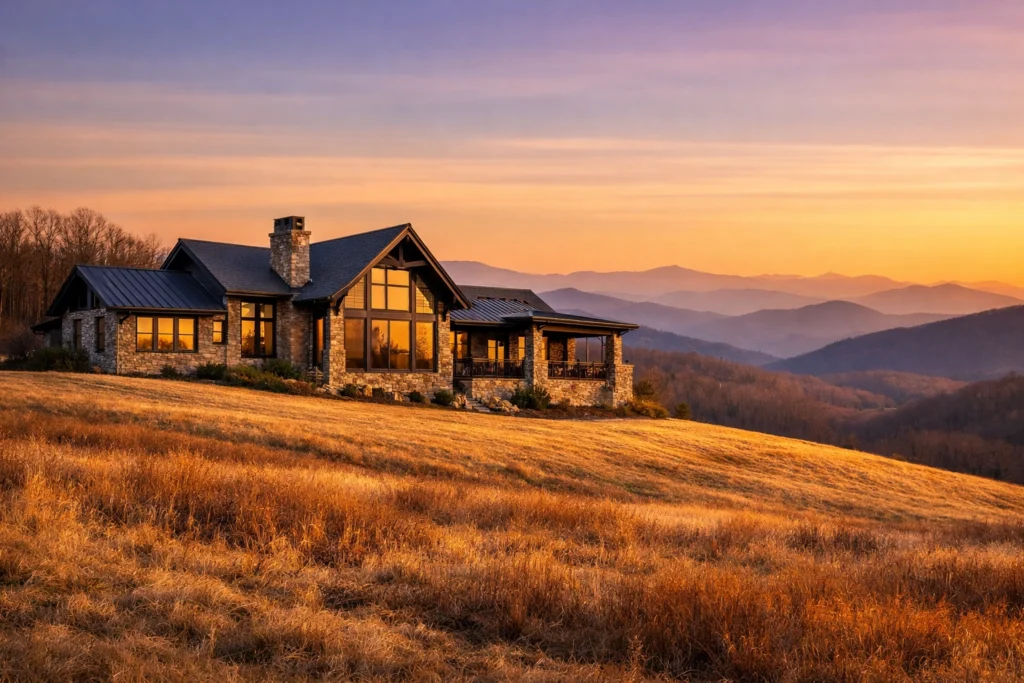
Many of the most desirable homes in Todd are perched on hillsides to capture those sweeping views of the valley. While living on a slope is visually stunning, it requires the foundation to do a lot of heavy lifting, literally.
Check for Movement: Your inspector will look for signs of shifting, such as “stair-step” cracks in brickwork or interior doors that refuse to stay open or shut.
Retaining Walls: If the property has retaining walls to hold back the hillside, these are just as important as the house foundation itself. Look for bulging or leaning walls, which could indicate poor drainage behind the stones.
Grading and Drainage: In the mountains, water is either your friend or your enemy. You want to see the land sloping away from the house. If the house is “cut” into a ridge, there should be a clear path (like a French drain or a swale) to divert runoff around the structure rather than into the crawlspace.
2. The Private Utility Duo: Wells and Septic Systems
If you’re moving from a city, you’re likely used to “city water” and “city sewer.” In the Todd area, however, most homes rely on private wells and septic systems. These are critical components that require their own specialized inspections.
The Septic Inspection
A standard home inspector usually does a visual check, but we highly recommend a dedicated septic inspection. A technician will locate the tank, “pump and dump” (if necessary), and use a camera to check the lines.
Perc Tests: If you are buying land to build on, the “perc test” determines how well the soil absorbs water. For existing homes, you want to ensure the drain field is still functioning and hasn’t been compromised by tree roots or heavy vehicles.
Life Expectancy: Septic systems don’t last forever. Knowing the age and condition of the tank can save you thousands down the road.
The Well Water Test
Mountain water is often crisp and delicious, but you need to know exactly what’s in it.
Flow Rate: This measures how many gallons per minute the well produces. You don’t want to be halfway through a shower and run out of water because the “recovery rate” is too slow.
Water Quality: We always suggest testing for bacteria, lead, and nitrates. In certain areas of the High Country, it’s also wise to test for radon or high iron content, which can stain fixtures.
3. High-Elevation Exteriors: Roofs and Decks
The weather in Todd can be beautiful, but it can also be harsh. Between the heavy snow loads in winter and the intense UV rays at higher elevations, a home’s exterior takes a beating.
Deck Integrity: In Todd, the deck is often the most-used “room” in the house. Your inspector will check the “ledger board” (where the deck attaches to the house) to ensure it’s properly flashed and bolted. Rotting post bases or shaky railings are safety hazards that need immediate attention.
Roofing Materials: Whether it’s architectural shingles or a metal roof, the inspector will look for wind damage or “scouring” from overhanging tree branches. Metal roofs are popular here because they shed snow easily, but they still need to be checked for loose fasteners.
Pest Intruders: Keep an eye out for carpenter bees and wood-boring beetles. These little guys love the cedar siding and log accents common in our area.
4. Indoor Air Quality: Radon and Mold
Because many mountain homes are built over crawlspaces or have basements tucked into the earth, moisture and air quality are top priorities.
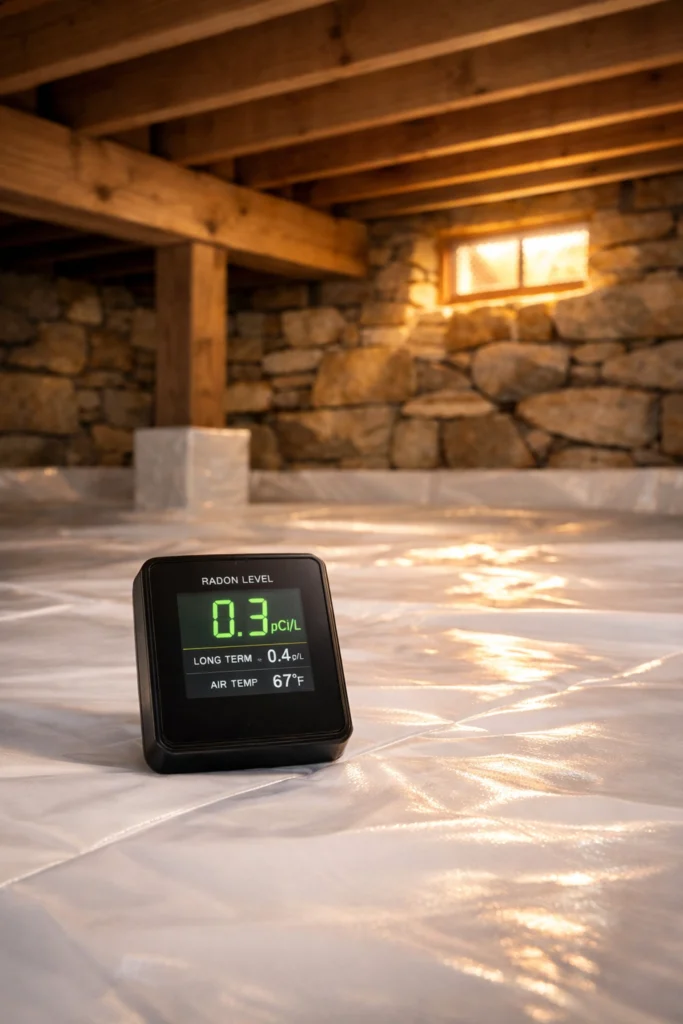
Radon Testing: Radon is a naturally occurring radioactive gas that can seep out of the rocky Appalachian soil. It’s odorless and colorless, so a 48-hour “charcoal canister” or digital test is the only way to detect it. If levels are high, a mitigation system can usually be installed quite easily.
The Crawlspace Check: A damp crawlspace is a recipe for mold and wood rot. Many modern homes in Todd now feature “encapsulated” crawlspaces with dehumidifiers. If the home you’re eyeing doesn’t have one, it might be something to consider after closing. If you are a first-time buyer navigating these technicalities, check out our guide to buying your first home in today’s market for more tips.
5. Navigating the 2026 Market Realities
As we move through early 2026, the market in Todd remains competitive but manageable. Buyers are being more diligent than ever. While it’s tempting to skip an inspection to make your offer more attractive, we rarely advise it. In fact, understanding the current trends is vital. You can read more about whether it’s finally a buyer’s market in Ashe County to see how these inspection contingencies are playing out in negotiations right now.
What Happens After the Inspection?
Once you receive that 50-page PDF report, don’t panic! No house is perfect: not even a brand-new one. Your report will likely contain a mix of:
Major Defects: Issues like a failing septic or a structural foundation crack. These are usually the “deal-breakers” or items for major negotiation.
Maintenance Items: Things like a foggy window pane or a loose gutter.
Safety Hazards: Exposed wiring or a missing handrail.
At Ashe County Realty, we help you sift through the “noise” to focus on what really matters. We can help you negotiate repairs or a price reduction so you can move forward with a clear head. We’ve seen it all, and we know which local contractors are the best for fixing mountain-specific issues.

Final Thoughts for Todd Buyers
The journey to owning a piece of the Blue Ridge Mountains is an exciting one. Todd is a special place where the pace of life slows down, and the air just feels cleaner. By being proactive with your home inspection, you ensure that your transition to mountain life is as smooth as a float down the New River.
Don’t let the technicalities of foundations and septic tanks overwhelm you. Think of the inspection as a “get to know you” session with your future home. It’s the best way to ensure those gold-brown mountain peaks remain a source of joy for years to come.
If you’re ready to start your search or have questions about a specific property in Todd, give us a shout at Ashe County Realty. We’re here to guide you home!

Sherry Goodman is a dedicated Real Estate Broker at Ashe County Realty
in West Jefferson, North Carolina. A native of Ashe County, she possesses deep-rooted local knowledge and a “born and raised” perspective on the High Country.
Professional Background
Sherry has over two decades of professional experience in the real estate industry, having served as a licensed broker since 2000. Her multifaceted expertise includes:
15 Years as a Real Estate Paralegal: Providing her with a technical understanding of property law and transaction details.
Certified Residential Appraiser: Allowing her to provide clients with accurate property valuations and market insights.
Owner/Broker Experience: She has previously owned and operated the Ashe Rental Agency, expanding her expertise into property management.
Areas of Expertise
Sherry specializes in connecting clients with the right properties in the North Carolina mountains, including West Jefferson and the surrounding New River area. Her advisory services often cover:
Investment Potential: Assessing vacation rental opportunities for buyers.
Property Upgrades: Advising sellers on strategic improvements to maximize property value.
Complex Transactions: Handling the intricate details of the moving process, from initial contract to closing.
Reputation and Community
Known for her integrity and professional yet personal approach, Sherry is highly regarded for her honesty and dedication to her clients’ needs. Sherry was officially voted ‘The Best of The Best of Ashe County’ by the Ashe Mountain Times. This recognition reflects her status as the best real estate agent for buyers and sellers seeking unparalleled local expertise in West Jefferson, Jefferson, and the surrounding High Country.
Contact Information
Agency: Ashe County Realty, 120 Greenfield Cir Unit 1, West Jefferson, NC 28694
Phone: (336) 877-7443
Email: [email protected]
Website: www.ashecountyrealty.com