

You’ve found the perfect mountain retreat in Ashe County, breathtaking views, peaceful surroundings, and that sense of escape you’ve been dreaming about. You’ve crunched the numbers on the mortgage, checked current rates hovering around 6%, and you’re ready to make your move. But here’s what many first-time mountain home buyers don’t realize: your monthly mortgage payment is just the beginning.
Mountain living comes with its own unique set of expenses that urban and suburban homeowners never think twice about. From keeping your well water flowing to clearing snow from your private drive, these hidden costs can add hundreds, sometimes thousands, of dollars to your annual budget. Let me walk you through what you really need to know before you sign on the dotted line for that dream property.
Well and Septic Systems: Your Private Utilities Come with Private Costs
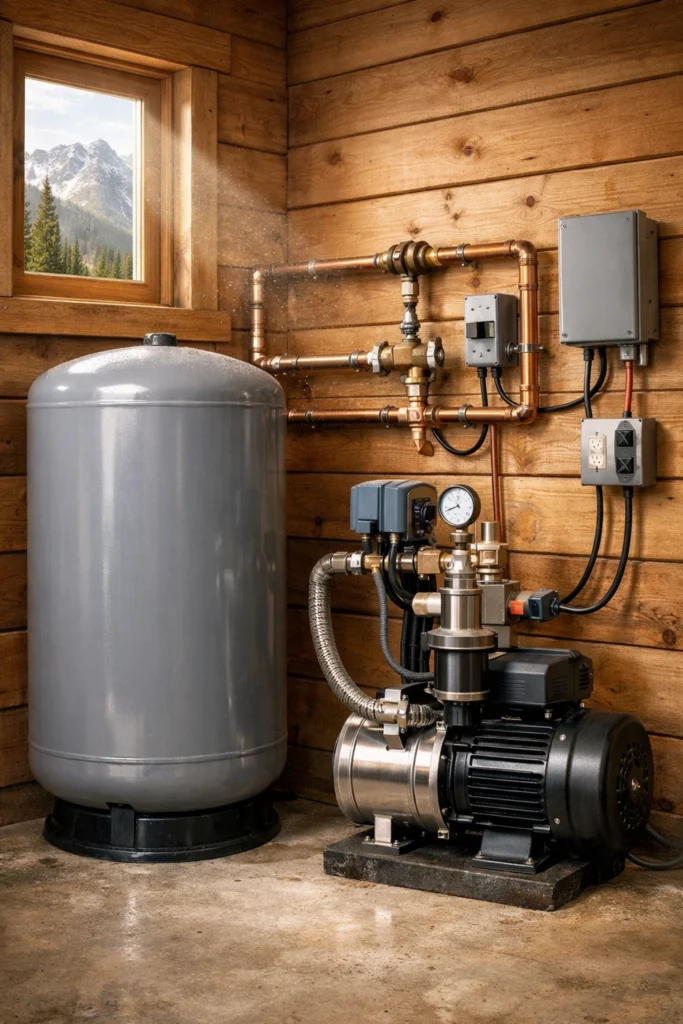
When you buy Ashe County NC real estate, particularly outside town limits, you’re likely looking at properties with well water and septic systems instead of municipal services. This independence is part of the mountain charm, but it also means you’re responsible for maintaining these critical systems.
Well Maintenance: A typical well can last 20-30 years with proper care, but you’ll need to budget for regular testing and occasional repairs. Annual water quality testing runs about $200-300, and it’s essential in mountain areas where runoff patterns can affect groundwater. Pump replacements, when they eventually happen, typically cost $1,500-3,000. You’ll also want to keep about $500 set aside for unexpected issues like pressure tank problems or electrical components that control your water flow.
Septic System Care: Your septic system needs pumping every 3-5 years, costing around $400-600 per visit. Skip this maintenance, and you’re looking at a complete system replacement that can easily hit $15,000-25,000. Regular inspections (about $200-300) can catch small problems before they become catastrophic failures. Trust me, you don’t want to learn this lesson the hard way.
Snow Removal: The Winter Reality of Mountain Living
Here in the High Country, winter isn’t a mild inconvenience, it’s a season that demands respect and preparation. While the town maintains public roads, your private driveway is your responsibility, and mountain driveways can be steep, winding, and long.
Budget $75-150 per plowing for a standard driveway, but if your property sits at the end of a quarter-mile private lane with a 15% grade, you’re looking at significantly more. Many mountain homeowners contract with local services for the entire season, typically paying $800-1,500 depending on the length and difficulty of their drive.
Don’t forget about the equipment you’ll need yourself. A quality snow blower runs $600-2,000, and if you’re planning to plow with a truck, add another $5,000-7,000 for a good plow attachment. Ice melt, sand, and other supplies add another $200-400 per winter. And if you’re planning this as a second home? You’ll need someone reliable to handle snow removal when you’re not here, another expense to factor in.
Road Maintenance Agreements: Sharing the Responsibility
Many beautiful properties in Ashe County sit along private roads shared with neighbors. This arrangement works beautifully when everyone understands their responsibilities and contributes fairly. Before you buy, you absolutely need to understand the road maintenance agreement.
What to Look For: Ask your agent (that’s where we come in) to review the road maintenance agreement carefully. Some are formal legal documents with specific annual fees, typically $300-1,200 per household depending on road length and number of users. Others are informal handshake agreements that can lead to disputes when repair costs arise.
Actual Costs: Grading a gravel road costs about $100-200 per pass, and mountain roads need grading 2-4 times yearly. Gravel replenishment runs $500-1,000 per dump truck load, and depending on your road’s condition and length, you might need multiple loads. Culvert replacement, drainage work, and tree removal add up fast. When a major washout happens after heavy rains, and they do happen, repairs can hit $5,000-10,000, split among the road users.
Mountain-Specific Insurance: Coverage That Reflects Your Reality
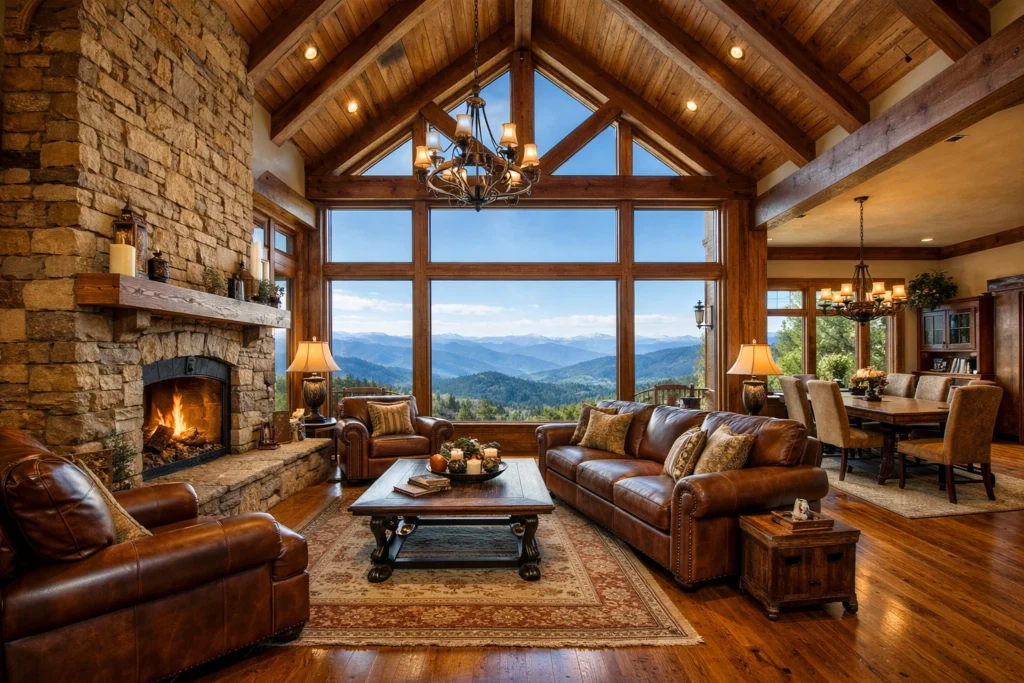
Your standard homeowners insurance might not cut it in the mountains. Insurance companies price policies based on risk, and mountain properties face unique challenges that translate to higher premiums.
Elevation and Weather Factors: Properties above 3,000 feet, which includes much of Ashe County, face increased premiums due to ice damage, heavy snow loads, and wind exposure. Expect to pay 15-30% more than comparable valley properties. Annual premiums for mountain homes typically run $1,500-3,000, but properties with wood-burning heat sources, older roofs, or significant distance from fire stations pay even more.
Coverage You Actually Need: Standard policies often exclude certain mountain-specific risks. You’ll want additional coverage for:
Well and septic damage from freezing or shifting ground
Ice dam damage to roofs and gutters
Higher wind coverage for ridge-top properties
Extended replacement cost because rebuilding in remote locations costs more
Debris removal coverage (fallen trees are a reality up here)
If your property includes a creek, pond, or sits in a flood zone, add flood insurance, another $400-2,000 annually depending on your exact location and elevation.
Property Taxes: Reasonable but Not Negligible
The good news? Ashe County property taxes are reasonable compared to many areas. The not-so-good news? “Reasonable” still means budgeting carefully, especially if you’re buying land or a higher-end home.
Current tax rates hover around $0.52 per $100 of assessed value, so a $300,000 home runs about $1,560 annually in property taxes. Sounds manageable, right? But remember, this is on top of everything else we’ve discussed. And if you’re buying land in Ashe County with plans to build, you’ll see a significant jump once your new home is completed and assessed.
Utility Costs: Distance and Elevation Have a Price
Mountain properties often mean longer utility runs and higher costs to deliver services. Propane is common here since natural gas lines don’t reach most mountain properties. Budget $1,200-2,400 annually for propane heating, with costs spiking during particularly cold winters.
Electric bills run higher too, not just because of heating needs, but because mountain properties often rely on electric well pumps, septic system components, and sometimes electric heating backup systems. Expect $150-300 monthly, with winter peaks hitting $400-500.
Internet and phone service deserve special mention. While coverage has improved dramatically, some remote properties still require satellite internet ($100-150 monthly) or cellular boosters ($400-600 one-time cost) to stay connected.
Land Maintenance: Nature Doesn’t Maintain Itself
If you’re buying a wooded property, and let’s face it, that’s much of Ashe County real estate, you’ll need to manage your land. Trees fall. Underbrush grows. Vines take over. Wildlife happens.
Annual tree maintenance and hazard removal typically costs $500-1,500, more if you have significant acreage or are creating views. A single large tree removal near structures runs $800-2,000. Bush-hogging or mowing for fire safety and aesthetics costs $200-400 per session, and you’ll need it done 2-3 times during growing season.
The Big Picture: Budgeting for Reality
Let’s be honest, I’m not sharing these costs to scare you away from mountain living. I’m sharing them because informed buyers become happy homeowners. The families who thrive in Ashe County are the ones who budget realistically and embrace the responsibilities that come with this incredible lifestyle.
A reasonable annual budget for “beyond the mortgage” mountain home expenses looks like this:
Well/Septic maintenance fund: $800-1,200
Snow removal: $1,000-2,000
Road maintenance: $300-1,200
Insurance premiums: $1,500-3,000
Property taxes: $1,200-2,500
Utilities (above normal): $500-1,000
Land maintenance: $1,000-2,000
That’s roughly $6,300-11,900 annually, or $525-990 monthly on top of your mortgage payment. Yes, it’s significant. But it’s also manageable when you plan for it from the start.
Making Your Mountain Dream Work
The beauty of working with experienced local agents is that we help you understand these realities before you fall in love with a property that’s beyond your total budget. We can point you toward homes with shorter driveways, properties on publicly maintained roads, or locations with lower insurance costs while still delivering that mountain lifestyle you’re after.
Mountain living offers rewards that far exceed these practical costs: the peace, the views, the connection to nature, the genuine community. Thousands of families have made it work beautifully, and with proper planning, you can too. The key is going in with your eyes wide open, your budget realistic, and your expectations properly set.
Ready to explore what mountain homeownership could look like for your specific situation? Let’s talk through the real numbers on properties that interest you. Because the right mountain home isn’t just one you can afford to buy( it’s one you can afford to keep.)