
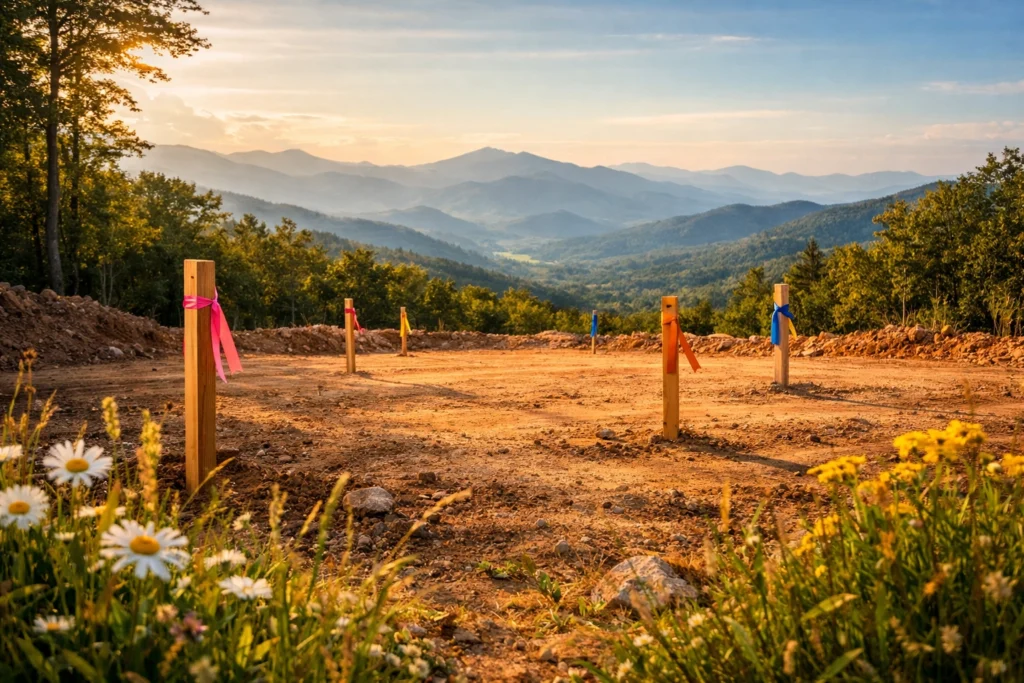
Buying land for sale in Ashe County NC is exciting, there’s something deeply satisfying about owning a piece of the High Country where you can build your dream home, start a hobby farm, or simply hold onto a slice of mountain paradise. But here’s the thing: buying raw land is completely different from buying a house. There are hidden costs, unexpected challenges, and a few curveballs that can trip up even the most prepared first-time buyer.
As of February 2026, Ashe County has a healthy inventory with about 421 land properties available across over 2,157 acres. Properties are moving to pending status in roughly 16 days, the sweet spot where the market is active but you’re not rushed into making hasty decisions. That’s good news for you as a buyer, because it means you have time to do this right.
I’ve seen too many folks get starry-eyed about a beautiful view or a creek running through their potential property, only to discover after closing that they can’t build where they wanted, or that bringing in power will cost tens of thousands of dollars. Let’s make sure that doesn’t happen to you.
Here are five critical steps to avoid costly mistakes when buying land in Ashe County.
Step 1: Walk the Land and Understand the Topography
This might seem obvious, but you’d be surprised how many people buy land based solely on photos or a quick drive-by. Before you make an offer on any land for sale in Ashe County NC, put on your hiking boots and actually walk every inch of the property.
Pay attention to:
Slope and Grade – Ashe County is gorgeous because it’s mountainous, but steep slopes mean higher building costs. You’ll need more extensive site preparation, possibly retaining walls, and a longer, more complex driveway. Building on a slope isn’t impossible, plenty of stunning homes perch on hillsides, but it requires specialized construction techniques that increase your budget.
Drainage Patterns – Where does water go when it rains? Look for natural drainage paths, wet spots, or areas where water pools. Poor drainage can lead to foundation issues, flooded basements, and soggy yards. In mountain terrain, water can move quickly during heavy rains, so understanding the flow is essential.
Rock Outcroppings – That rocky ledge might look picturesque, but if it’s sitting right where you want to build, you’re looking at expensive blasting or relocating your building site. Excavating rock costs significantly more than moving dirt.
Access Points – How will you get to your building site? A flat, easily accessible parcel costs less to develop than one requiring a quarter-mile driveway up a steep grade. Factor in not just the initial construction but ongoing maintenance, plowing snow, grading gravel, and maintaining culverts.
Take photos, make notes, and if possible, visit the property multiple times in different weather conditions. That gorgeous wooded lot might reveal drainage issues after a heavy rain that weren’t visible on a sunny afternoon.
Step 2: Research Deed Restrictions and Covenants
This step can save you from heartbreak. Deed restrictions and protective covenants are rules established by previous owners or developers that control what you can and can’t do with your property. They’re legal and binding, and they don’t go away when you buy the land.
Common restrictions on land for sale in Ashe County NC might include:
Minimum Square Footage Requirements – Some subdivisions require homes to be at least a certain size, often 1,200 to 2,000 square feet. If you’re dreaming of a cozy 800-square-foot cabin, you need to know this before closing.
Architectural Guidelines – These might dictate exterior materials, roof pitch, or even paint colors. While they help maintain property values, they can limit your creative freedom.
Use Restrictions – Can you run a business from the property? Raise chickens? Park an RV? Some restrictions prohibit commercial activity, livestock, or certain types of outbuildings.
HOA or Road Maintenance Fees – Even on raw land, you might be responsible for annual fees that cover road maintenance or other shared expenses.
Your real estate agent should provide you with any recorded restrictions, but it’s smart to also check with the Ashe County Register of Deeds. Read every word carefully. If something’s unclear, have a real estate attorney review it before you sign. Spending a few hundred dollars on legal advice now can prevent a six-figure mistake later.
Step 3: Get a Perc Test (Septic System Viability)
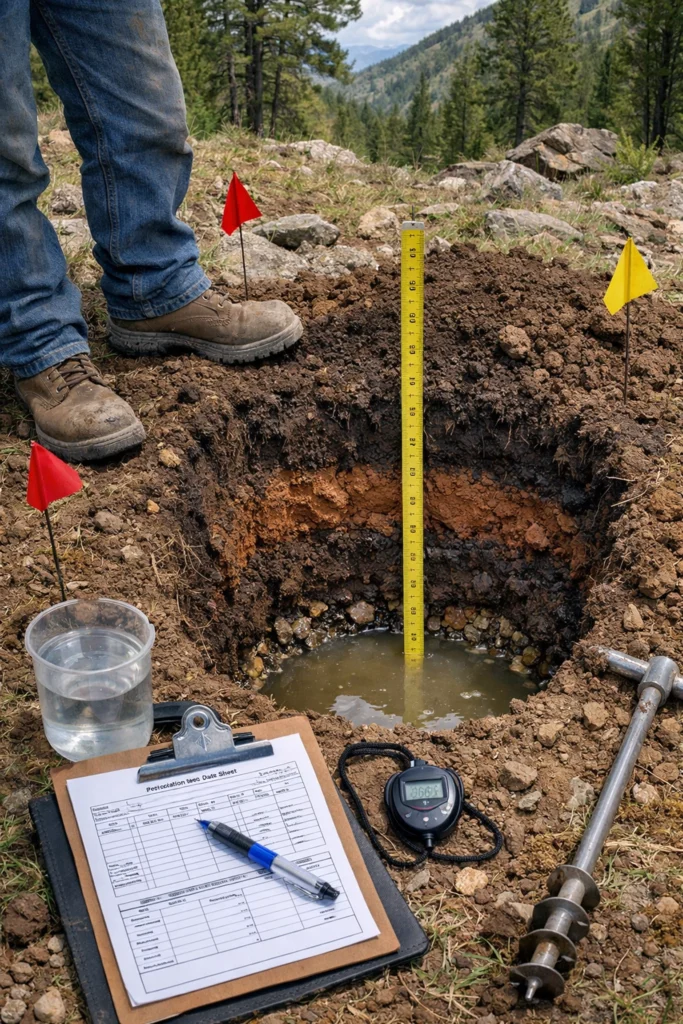
Here’s a non-negotiable: if your land isn’t connected to public sewer, you’ll need a septic system. And whether you can install a septic system depends on passing what’s called a “perc test” or percolation test.
A perc test evaluates how well the soil absorbs water. The Ashe County Health Department requires this test before they’ll issue a permit for a septic system. Here’s what you need to know:
Test Before You Buy – Make your offer contingent on a successful perc test. Don’t assume any parcel can support a septic system. Some lots fail due to clay-heavy soil, high water tables, or insufficient space for a drain field.
Location Matters – The septic field needs to be a certain distance from wells, property lines, and water sources. On smaller or oddly shaped lots, this can be challenging. The health department has strict setback requirements, so factor this into your site planning.
Costs Vary – A conventional septic system might run $5,000 to $10,000, but if your soil doesn’t perc well, you might need an alternative system (like a mound system or aerobic treatment unit) that can cost $15,000 to $30,000 or more.
Testing Season – Perc tests can’t be done when the ground is frozen or saturated. Plan accordingly if you’re looking at land in winter or during very wet periods.
Failing a perc test doesn’t necessarily mean the land is worthless, there are alternative systems, but it dramatically changes your budget and timeline. Get this information upfront.
Step 4: Verify Utility Access and Costs
The dream is to build in a private, secluded spot surrounded by nature. The reality? Getting power, water, and internet to that remote location can be shockingly expensive.
Electricity – Contact Blue Ridge Electric or the local utility provider to find out where the nearest power line is located. If it’s at the road, you’re in good shape. If it’s a quarter mile away on the other side of a mountain, you might be looking at $10,000 to $50,000+ to bring in power. Yes, really. The utility company typically covers a certain distance for free (often around 300-500 feet), but beyond that, you’re paying per pole and per foot of line.
Water – Will you drill a well or connect to public water? Well drilling in Ashe County typically costs $15 to $30 per foot, and you won’t know how deep you need to go until you drill. Most wells in the area range from 150 to 400 feet, putting costs anywhere from $3,000 to $12,000 or more. Public water, if available, comes with connection fees and monthly bills.
Internet and Phone – Don’t assume you’ll get high-speed internet. Many rural areas of Ashe County still have limited broadband access. If working from home is part of your plan, verify what’s available. Starlink satellite internet has improved options for remote areas, but do your homework.
Natural Gas – Probably not happening. Most rural properties in Ashe County use propane, which means installing a tank and arranging for regular deliveries.
Get written quotes before you buy. Call utility companies with the parcel number and GPS coordinates. Understanding these costs upfront helps you budget accurately and negotiate appropriately.
Step 5: Budget for Survey, Site Prep, and Environmental Factors
The purchase price of land for sale in Ashe County NC is just the beginning. Here are additional costs that catch first-time buyers off guard:
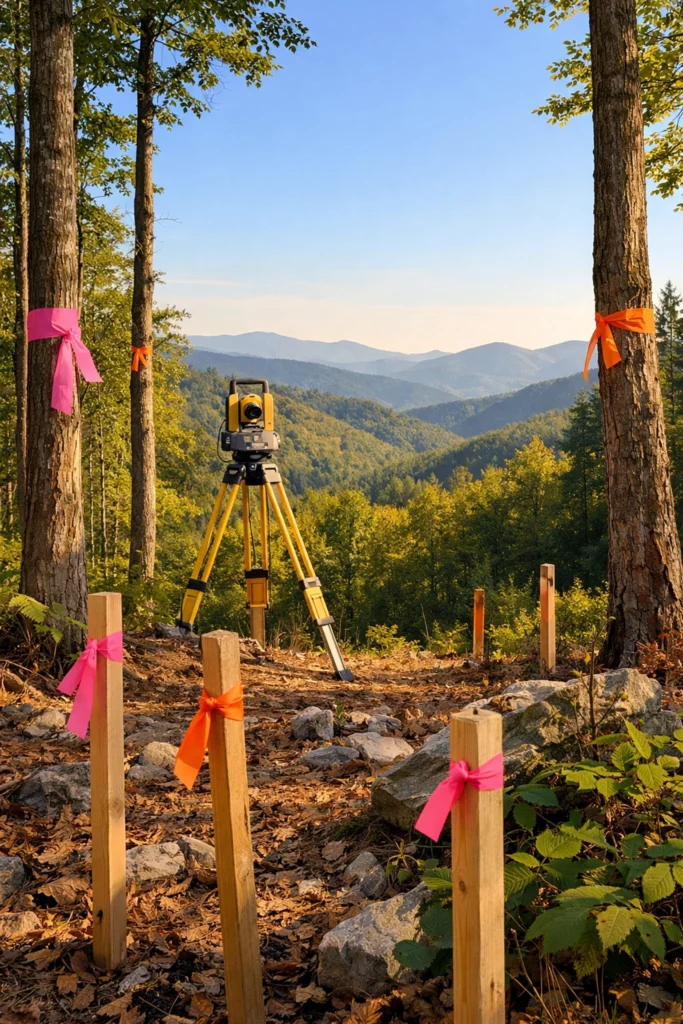
Land Survey – Lenders typically require a current survey, and you should want one regardless. A proper survey costs $1,500 to $5,000+ depending on acreage and terrain. It defines your boundaries, identifies encroachments, and reveals easements you might not have known about.
Soil and Environmental Testing – Beyond the perc test, you might need soil tests for foundation planning. If there’s any question about prior land use, environmental assessments can reveal contamination issues.
Site Preparation – Clearing trees, grading the building pad, and creating a driveway can easily run $10,000 to $30,000 before you even pour a foundation. Steep terrain or dense woods increase these costs significantly.
Erosion Control – Ashe County has erosion control requirements for construction sites. You’ll need silt fencing and sediment basins during construction, and you’re responsible for preventing muddy runoff into streams.
Seasonal Considerations – Building in the mountains means planning around weather. Heavy snow can shut down construction, and frozen ground limits what excavators can do. Budget extra time and money for weather delays.
Making Your Land Purchase Work
Buying land is different from buying a house, but with the right preparation, it’s incredibly rewarding. The current Ashe County market: with properties averaging around $13,902 per acre and a median list price of $659,780: offers opportunities for buyers willing to do their homework.
Prime parcels in desirable areas like West Jefferson, Glendale Springs, and Creston don’t sit on the market long. When you find something special, you’ll need to move fairly quickly: but never so quickly that you skip these five essential steps.
Work with a local real estate agent who knows land for sale in Ashe County NC. They can guide you through the nuances of mountain property purchases, connect you with reliable well drillers and septic installers, and help you ask the right questions before you commit.
Your piece of the High Country is out there. Take your time, do your due diligence, and avoid the costly mistakes that trip up less-prepared buyers. The view from your future front porch will be worth the extra effort.