
There’s something undeniably magical about standing on a piece of raw land in the High Country, breathing in that crisp mountain air, and imagining the possibilities. Whether you’re dreaming of building a custom mountain retreat, starting a small farm, or simply investing in a slice of the Blue Ridge for the future, buying land in Ashe County is one of the smartest moves you can make.
But here’s the thing: purchasing raw land isn’t quite the same as buying an existing home. There are unique considerations, from zoning regulations to soil testing, that you’ll want to understand before signing on the dotted line. Consider this your practical, no-nonsense guide to navigating the process with confidence.
Why Ashe County? The Benefits of Owning Land in the High Country
Before we dive into the nuts and bolts, let’s talk about why so many people are searching for Ashe County land for sale in the first place.
Nestled in the beautiful Blue Ridge Mountains, Ashe County offers a rare combination of natural beauty, affordability, and opportunity. You’re just a few hours from Charlotte and Winston-Salem, yet worlds away from the hustle and bustle. The rolling pastures, long-range mountain views, and peaceful atmosphere make this region a magnet for those seeking a slower pace of life.
Here’s what makes owning land here so appealing:
Long-term appreciation potential. Land in desirable mountain communities tends to hold its value and grow over time.
Lifestyle flexibility. Build your dream cabin, start a small hobby farm, or simply hold onto the property as your personal escape.
Passive income opportunities. Some landowners generate income through timber farming, agricultural leases, or vacation rental development.
Privacy and peace. There’s nothing quite like owning your own corner of the mountains where you can truly disconnect.
Currently, Ashe County has over 400 properties available, with a median price per acre around $13,900. Whether you’re looking for a small lot or a sprawling multi-acre tract, there’s something here for nearly every budget and vision.
Understanding Zoning in Ashe County
One of the first questions you should ask when looking at land for sale in Ashe County NC is: What can I actually do with this property?
That’s where zoning comes in. Zoning regulations determine how land can be used: residential, agricultural, commercial, or a combination. The good news? Ashe County offers both restricted and unrestricted land options, giving you flexibility depending on your goals.
Here’s what you need to know:
Restricted land typically has covenants or deed restrictions that limit what you can build, the types of structures allowed, or even whether you can have certain animals on the property. These restrictions often exist in planned communities or subdivisions.
Unrestricted land gives you more freedom. Want to build a tiny home? Park an RV while you construct your cabin? Raise chickens and goats? Unrestricted parcels often allow these activities: but always verify before purchasing.
Pro tip: Don’t assume anything. Always request a copy of any deed restrictions or covenants and review the county’s zoning maps. What sounds like the perfect property on paper might have limitations that don’t align with your plans.
The Importance of Perc Tests (And Why You Can’t Skip This Step)
If you’re planning to build on your land: especially if the property isn’t connected to public sewer: you’ll need to understand perc tests.
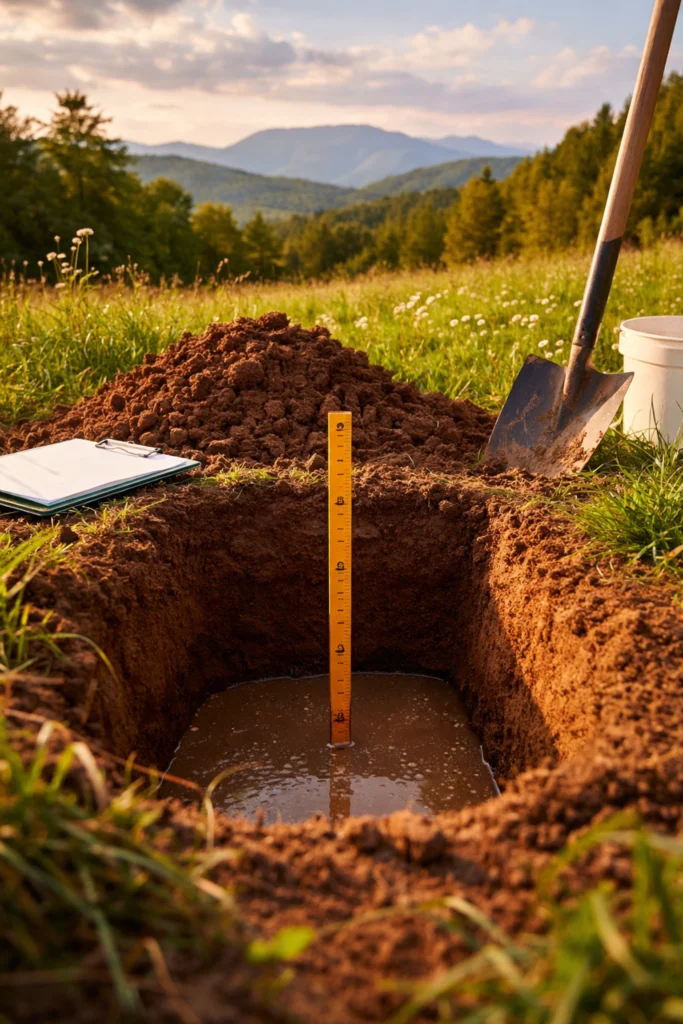
A percolation test (or “perc test”) measures how quickly water drains through the soil. This determines whether the land can support a septic system and what type of system you’ll need. In rural areas like Ashe County, where public sewer isn’t always available, this test is absolutely essential.
Here’s why it matters:
No passing perc test = no septic permit. Without a functioning septic system, you can’t build a home with plumbing.
Soil conditions vary widely. Even neighboring parcels can have dramatically different results. Rocky terrain, clay-heavy soil, or high water tables can all impact drainage.
Different systems have different costs. If the soil doesn’t perc well, you may need an alternative septic system, which can add thousands to your construction budget.
Before you buy: Always make your purchase contingent on a satisfactory perc test, or confirm that one has already been completed. Your real estate agent can help you navigate this process and connect you with local professionals who perform these evaluations.
Other Key Considerations When Buying Raw Land
Beyond zoning and perc tests, there are several other factors that can make or break your land purchase. Here’s what savvy buyers evaluate:
Road Access
Is the access road public or private? Private roads may require maintenance agreements with other property owners.
Is it accessible year-round? Mountain winters can be tough. Make sure you can reach your property even after a snowfall.
What’s the condition of the road? Gravel, paved, or dirt? Steep or gradual? These details matter for both construction and daily use.
Utilities and Infrastructure
Water: Is there a well on the property, or will you need to drill one? Is there access to a spring or municipal water?
Electric: How far is the nearest power line? Running electricity to a remote parcel can be costly.
Internet: If you plan to work remotely or use the property as a vacation rental, reliable internet access is a must. Check availability before you commit.
Topography and Usable Land
Not all acreage is created equal. A 10-acre parcel with mostly steep, wooded terrain will have far less usable space than a 5-acre lot with gentle, rolling pastures. Consider:
Building sites: Is there a level area suitable for construction?
Views vs. privacy: Open land offers stunning mountain vistas; wooded lots provide seclusion. Decide what matters most to you.
Flood zones: Check FEMA flood maps to ensure your building site isn’t in a high-risk area.

Work With a Local Expert Who Knows the Land
Buying raw land is exciting, but it’s also complex. The smartest thing you can do? Partner with a real estate professional who truly understands Ashe County’s unique market.
Beverly Black, Owner and Broker in Charge at Ashe County Realty, has extensive experience guiding buyers through land transactions in the High Country. From helping you identify parcels that match your vision to navigating zoning questions, perc tests, and negotiations, Beverly brings the local knowledge and hands-on expertise that makes all the difference.
Whether you’re a first-time land buyer or a seasoned investor, having someone in your corner who knows the terrain, literally and figuratively: can save you time, money, and headaches.
Ready to Find Your Perfect Piece of the High Country?
Owning land in Ashe County is more than an investment: it’s an opportunity to create something meaningful. Maybe it’s the mountain cabin you’ve always dreamed of. Maybe it’s a quiet retreat where your family gathers for generations. Or maybe it’s simply a piece of earth that’s yours, where the views stretch for miles and the pace of life slows down.
Whatever your vision, the key is doing your homework. Understand the zoning. Get that perc test. Evaluate road access and utilities. And most importantly, work with someone who can guide you through every step of the process.
Ready to explore what’s available? Browse current land listings in Ashe County or reach out to the team at Ashe County Realty to start the conversation. Your piece of the High Country is waiting.